


Breaking the Silence, Ending the Global Neglect
are now represented by Members of Parliament supporting the Power in Menopause Declaration.

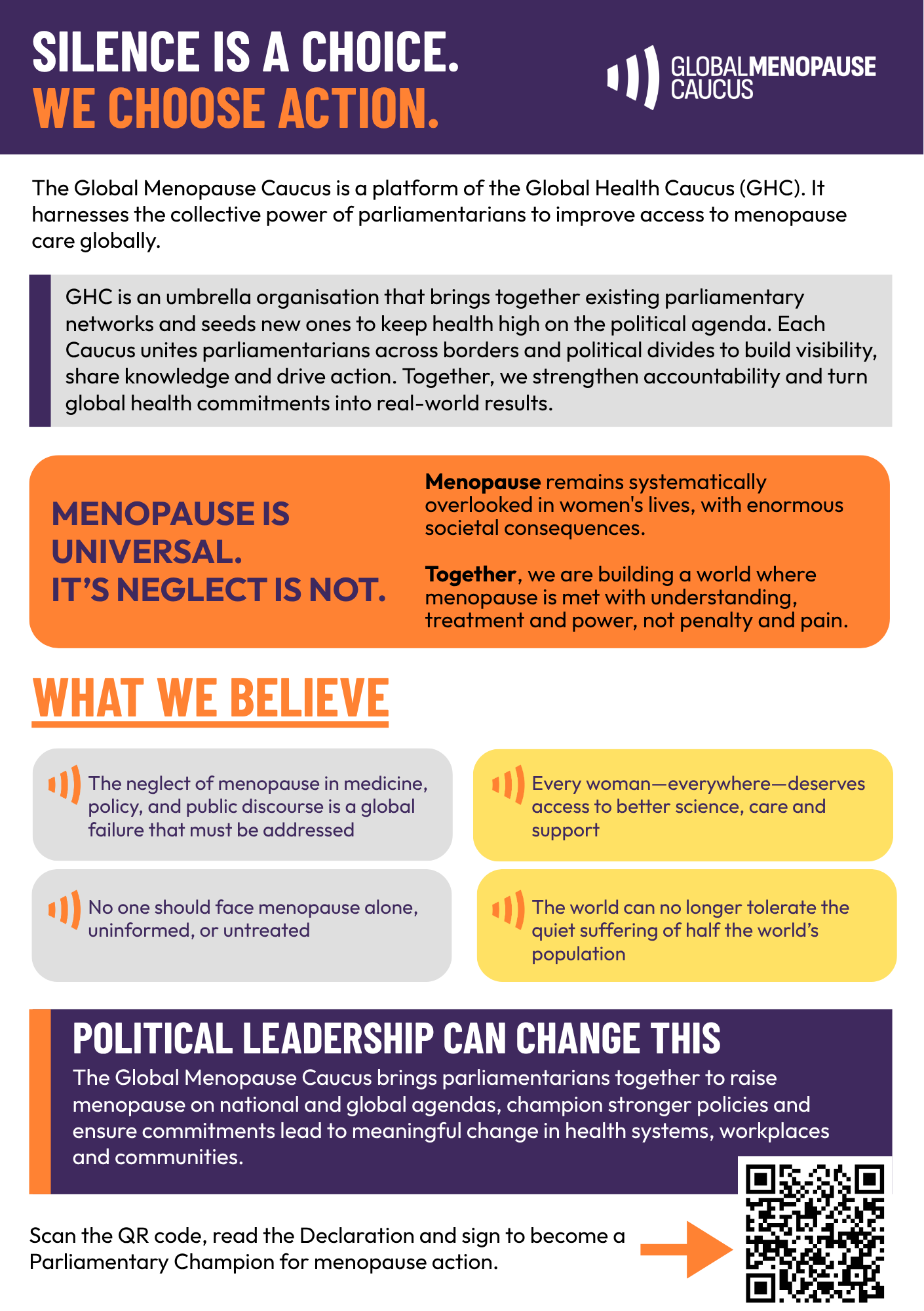
Menopause is one of the most universal yet systematically overlooked realities in women’s lives with enormous societal consequences. Every woman—everywhere—deserves better science, care and support. Join us to build a world where menopause is met with understanding, treatment, and power, not penalty and pain.
Show your support for the global declaration

Parliamentary Support Network
The MPs featured on this page represent a selection of Global Menopause Caucus members. This is not a complete list and the page is updated regularly as more parliamentarians join.

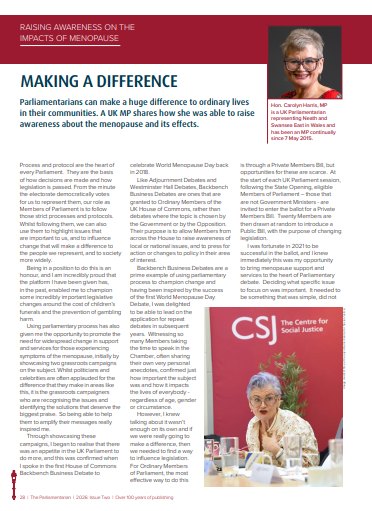
Carolyn Harris
Chairperson of the Global Menopause Caucus, MP for Neath & Swansea East
UNITED KINGDOM

Charles Ayume
Minister of State for Health, MP representing Koboko Municipality
UGANDA

Dabah M. Varpilah
Senator, Grand Cape Mount County; Chairwoman, Senate Standing Committee on Health
LIBERIA

Daniel Molokela
Chair of the African Taskforce on Domestic Resource Mobilisation
ZIMBABWE

Faith Muthambi
Chairperson of the Portfolio Committee on Health
SOUTH AFRICA

Gerhardine Katjingisiua
Chair, Gender Equality, Health and Social Welfare Committee
NAMIBIA

Isaac Adongo
Member of Parliament for Bolgatanga Central; Chair of Finance Committee
GHANA

Joseph Makhalanyane
Chair of Chairs and Chairperson of the Social Cluster
LESOTHO

Lynette Karenyi
Member of Parliament for Chikanga, National Assembly of Zimbabwe
ZIMBABWE

Modou Lamin B. Bah
National Assembly Member, Constituency: Banjul North
THE GAMBIA

Petra Bayr
Member, National Council; Chairwoman, Foreign Affairs Committee
AUSTRIA

Tanja Machalet
Member of the German Bundestag
GERMANY

Rafael R. Castro
Vice President, National Parliamentary Representation Office
ECUADOR
Power in Menopause
A Global Declaration
Menopause is one of the most universal yet systematically overlooked realities in women’s lives, with enormous societal consequences.
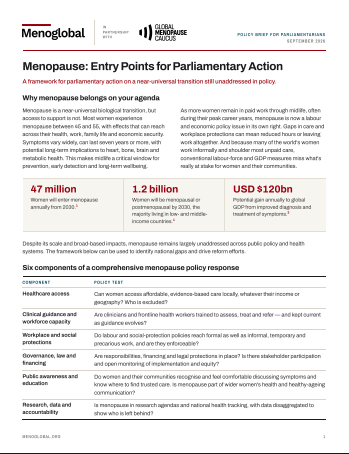
Menopause is not a disease. It is a decade-long transition that half of the world’s population will experience during their lifetimes. (i) By 2030, 1.2 billion women around the world will be menopausal or post-menopausal. (ii)
And while everyone experiences menopause differently, four out of every five women experience profound physical, emotional, and cognitive symptoms that impact their health, lives, and livelihoods. (iii) Too many of these women are forced to tolerate symptoms and discomfort in silence or without treatment.
We are here to change this. The Power in Menopause campaign is a new global movement demanding action on menopause.
Menopause: A Global Health Crisis Hiding in Plain Sight
Menopause symptoms can affect every dimension of women’s health. Hot flashes can impact women’s sleep cycles, trigger mood swings, and leave women more vulnerable to depression. (iv) Hormonal changes that accompany menopause can drastically alter women’s metabolism and bone density, increasing women’s risk of long-term disability and heart disease. (v, vi, vii)
Menopause symptoms can be so debilitating that every year, they rob the world’s women of 2.4 million healthy years of life. (viii)
Yet millions of menopausal women suffer in silence due to a systemic lack of information, misdiagnosis, or stigma. In many cases, it’s celebrities, not health systems, who are encouraging women to openly discuss their experiences and seek support.
And most health professionals are not specifically or adequately trained on menopause, so they may not know how to identify symptoms or counsel women experiencing menopause. (ix) As a result, women are exposed to misinformation and companies pushing unverified advice and products on the internet and social media.
Even hormone therapy (HT) — a proven treatment for menopause symptoms — remains under-prescribed, misunderstood, or inaccessible in many parts of the world. The result: millions of menopausal women are forced to experience unnecessary discomfort that medicine can manage. (x,xi,xii)
Much about menopause remains unknown because of existing data gaps and because it remains grossly under-invested and under-researched, particularly in low- and middle-income countries, and among Indigenous and marginalized groups. (xiii, xiv)
Menopause Policies are Beginning to Emerge — but Remain Exceedingly Rare
Despite its widespread impact, most countries still don’t treat menopause as a public health priority.
Robust national frameworks are urgently needed to increase research funding, improve access to care and education, and expand workplace accommodations.
A few countries, including the UK, Spain, and Kenya, are leading the way and offer a blueprint forward. These countries have initiated country guidelines and workplace initiatives. Without coordinated investment and leadership, tens of millions of women will continue to navigate menopause unsupported and underserved.
Menopause is an Economic Imperative and a $120 Billion USD Opportunity
Menopause is not just a health issue; it’s an economic one too. Perimenopausal women are the fastest growing portion of the workforce, so menopause symptoms have huge implications for companies and economies. (xv)
Menopause symptoms can make work difficult, and disrupt women’s careers and economic productivity. (xvi, xvii) Research shows that nearly one in four working women have quit or considered quitting their jobs due to menopause symptoms. (xviii)
But we have the power to change this. Helping women to better manage their menopause symptoms is not just a moral imperative, it’s also a smart financial decision that could add $120 billion USD to the global economy, every year. (xix)
The Power in Menopause Campaign Issues a Global Call to Action
We believe that:
-
The neglect of menopause in medicine, policy, and public discourse is a global failure that must be addressed.
-
Every woman—everywhere—deserves better science, care and support.
-
No one should face menopause alone, uninformed, or untreated.
-
The world can no longer tolerate the quiet suffering of half the world’s population.
RESOURCES
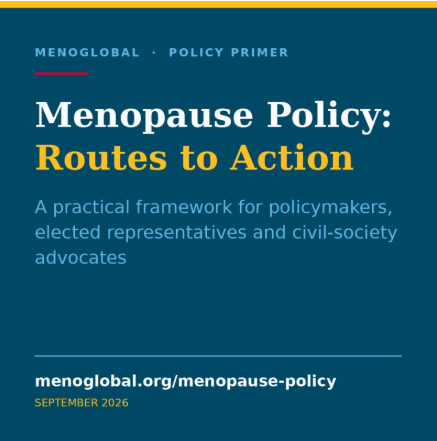
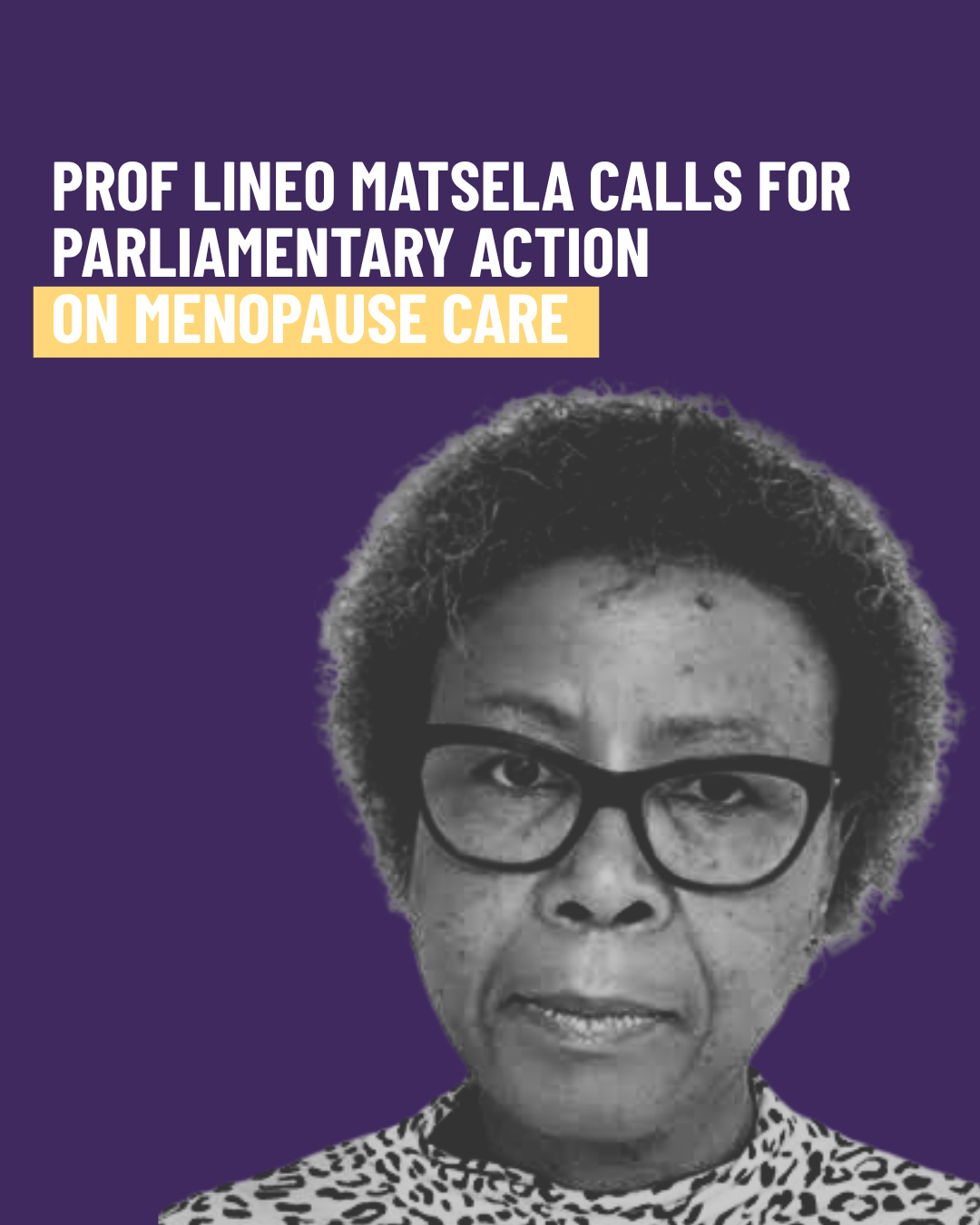
Learn more about the Global Menopause Caucus and why political action on menopause matters. Our publications introduce our work to bring parliamentarians together, challenge stigma and build political commitment to better care and support.
These materials offer a starting point for conversations in parliament and your community. Read and share them to help build understanding and support for action.


IN PARTNERSHIP WITH

